
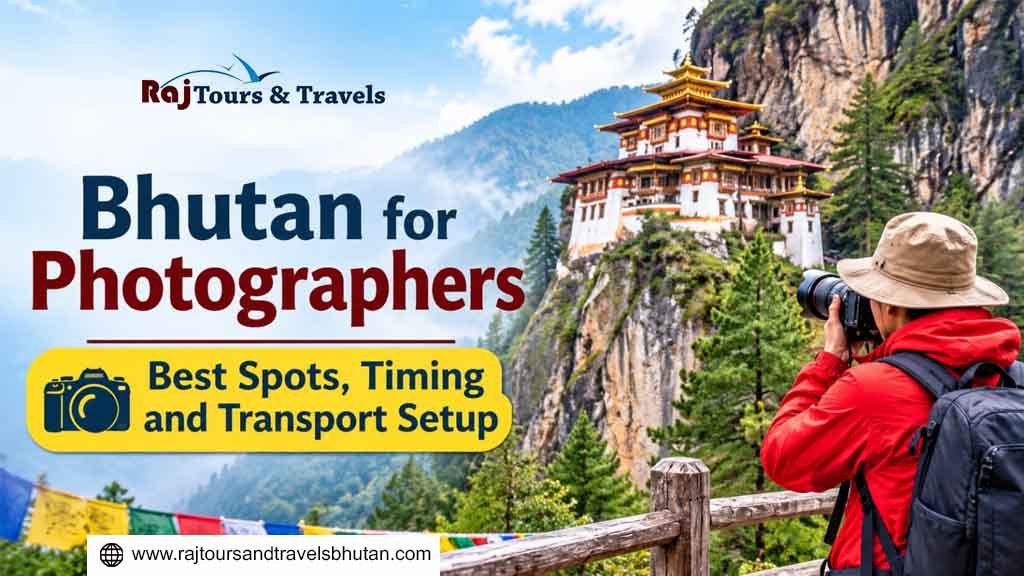
Bhutan for Photographers: Best Spots, Timing and Transport Setup
Few places reward a camera like Bhutan. Dzongs sit above rivers, prayer flags line mountain passes, monks cross courtyards in deep red robes, and the light changes every hour in the valleys. But great photographs here rarely happen by accident. They depend on where you go, when you go, and how you move between locations.
This guide covers the best photography spots, the right seasons and festivals, and a practical transport setup. A good travel agency in Bhutan or tour operator in Bhutan can then turn all of this into a workable plan.
Why Bhutan is a Photographer’s Destination
- Dramatic landscapes: Forested valleys, terraced fields, glacial rivers and Himalayan ridgelines, often in the same day.
- Living culture: Traditional dress, archery matches, festivals and daily rituals remain part of ordinary life.
- Distinctive architecture: Dzongs, chortens, temples and whitewashed farmhouses with painted details.
- Fewer crowds at many sites: Away from the main hotspots, you can often work without a dozen tripods in your frame.
Best Photography Spots in Bhutan
Paro: Tiger’s Nest (Paro Taktsang)
The monastery on the cliff face is the most photographed sight in Bhutan. The hike takes several hours round trip, so plan for early starts and good footwear. A viewpoint on the trail gives the classic cliffside frame. Inside the monastery, photography is generally not allowed, so confirm the rules with your guide before you carry your camera in.
Also in Paro: Paro Rinpung Dzong, the old wooden bridge (Nyamai Zam), and the Paro valley rice fields, which are especially beautiful in autumn.
Thimphu
- Tashichho Dzong at sunset, when the golden roofs glow, with lights coming on in the evening.
- Buddha Dordenma, a giant statue overlooking the valley.
- Local markets and street scenes for documentary-style portraits (always ask permission).
Dochula Pass
The pass, at about 3,100 m, has 108 memorial chortens and, on clear days, panoramas of the eastern Himalayas. Go early for the best chance of clear skies, because clouds often build later in the day.
Punakha
- Punakha Dzong, set at the meeting point of two rivers, is considered one of the most photogenic dzongs in the country.
- The suspension bridge over the Pho Chhu river is a favourite for long exposures and people-in-landscape shots.
- Chimi Lhakhang and the paddy-field walk nearby offer rural scenes.
Phobjikha (Gangtey) Valley
A wide glacial valley with misty mornings, pine forests and the Gangtey monastery. It is also the winter home of black-necked cranes, which arrive from late October or November and stay through the cold months. Keep a respectful distance, because the birds are protected and sensitive to disturbance.
Haa Valley and Chele La Pass
Haa is quieter and less visited. Chele La, one of the highest road passes, offers prayer-flag foregrounds and mountain views on clear days. Altitude and cold can affect both you and your batteries, so pack accordingly.
Trongsa and Bumthang
- Trongsa Dzong is dramatic, with its long tiers on a ridge above a gorge.
- Bumthang has temples, farmland and festivals, and feels less hurried than the western valleys.
Best Time to Photograph Bhutan
Season | What You Get | Photographer’s Notes |
Spring (March to May) | Rhododendrons, blooming valleys, popular festivals | Pleasant weather, but afternoon haze and clouds are possible |
Summer / Monsoon (June to August) | Lush greens, dramatic clouds, fewer visitors | Rain, leeches on trails and landslide risk, so build in flexibility |
Autumn (September to November) | Clear skies, crisp mountain views, harvest fields | Often considered the best season, with high demand for hotels and cars |
Winter (December to February) | Crisp light, snow on high passes, crane season in Phobjikha | Cold mornings, some high routes may be affected by snow |
Golden hours matter
Valleys are narrow, so sunlight can arrive late and leave early. Plan your key locations for early morning and late afternoon, and use midday for travel, indoor visits or rest.
Festivals Worth Planning Around
Bhutan’s tshechus (religious festivals) are full of masked dances, bright costumes and crowds in traditional dress. Well-known ones include festivals in Paro and Thimphu, with others held across districts throughout the year.
Tips for Festival Photography
- Dates follow the Bhutanese lunar calendar and change every year, so confirm them with an official source or your operator.
- Book hotels and vehicles early, since these dates fill up fast.
- Arrive early to find a position that doesn’t block worshippers or officials.
- Follow instructions from organisers and guides about restricted zones.
- Avoid flash, and never step into the dance area for a better angle.
Photography Etiquette and Rules
Bhutan is a living spiritual culture, not a film set. Keep these in mind:
- Interiors of temples, shrines and some dzong areas often prohibit photography. Ask before you shoot.
- Ask people before photographing them, especially monks, elders and children.
- Dress modestly at religious sites, and remove hats and shoes where required.
- Drones are regulated in Bhutan. Don’t assume you can fly one, and check current permission requirements through official channels or your operator before bringing it.
- Don’t climb on or touch sacred objects for a photograph.
- Respect wildlife and stay on marked trails.
Transport Setup for a Photography Trip
Bhutan’s roads wind through mountains, so distances on the map don’t tell you the travel time. A photographer’s schedule needs flexibility, not a rushed itinerary.
Why a Private Vehicle Suits Photographers
- You can stop when the light or scene is right.
- Your gear stays secure and dry in the vehicle.
- You can start before sunrise or stay out after sunset.
- You can work at your own pace without sticking to a group’s timing.
That is why many photographers prefer car rental service in Bhutan with an experienced driver over fixed-schedule transport.
Choosing the Right Vehicle
- SUV or similar 4WD-capable vehicle: Better ground clearance and comfort on mountain roads, and useful in rain or on rougher sections.
- Space for gear: Check boot space for tripods, camera bags, drone cases (if permitted) and luggage.
- Seating plan: If travelling in a group, make sure every photographer gets a window seat and room to move.
- Comfortable seats and good suspension: Long drives can be tiring.
Choosing the Driver
- Familiarity with Bhutan routes and viewpoints.
- Willingness to stop on request and wait for light.
- Safe, calm driving on curves, at altitude and in fog.
- Good communication with your guide and tour operator.
Smart Itinerary Design
- Allow buffer days – Weather, road work or landslides can change plans.
- Don’t pack too many dzongs into one day – Spend time at fewer places instead.
- Schedule early starts for Tiger’s Nest and mountain passes.
- Stay near key locations, for example in Punakha for river and dzong light, or in Phobjikha for valley mornings.
- Add rest days between long driving stretches to avoid fatigue.
- Plan batteries and storage – Cold drains batteries faster, and you will shoot more than you expect.
Permits, Guides and Routes
Entry rules, permits, visa clearance and guide requirements differ by nationality and can change, so check the latest official requirements or ask your operator. A licensed tour operator in Bhutan can arrange permits and routes in line with the rules. Vehicle availability and route permissions can also vary, so confirm them in writing before you finalise your plan.
Sample 7-Day Photography Itinerary
- Day 1: Arrive in Paro, evening around Paro Dzong and the wooden bridge.
- Day 2: Tiger’s Nest hike in the early morning, relaxed afternoon.
- Day 3: Drive to Thimphu, sunset at Tashichho Dzong.
- Day 4: Dochula Pass at sunrise, continue to Punakha, Punakha Dzong in late light.
- Day 5: Chimi Lhakhang, rice fields and suspension bridge, then drive toward Phobjikha.
- Day 6: Misty morning in Phobjikha Valley, return toward Paro or Thimphu.
- Day 7: Local market scenes, shopping and departure.
This is only a sample. Timings, road conditions, festival dates and your personal photography goals will shape the final plan.
Gear Checklist
- Wide-angle lens for dzongs and landscapes.
- Mid-range zoom for general travel and portraits.
- Telephoto lens for details, wildlife and distant monasteries.
- Sturdy, lightweight tripod.
- Polariser and ND filters.
- Extra batteries and memory cards.
- Rain covers and silica gel packs.
- Lens cleaning kit (dust and moisture are common).
- Layered clothing and comfortable walking shoes.
How Raj Tours & Travels Supports Photographers
As a travel agency in Bhutan focused on practical, comfortable journeys, Raj Tours & Travels helps photographers with:
- Custom itineraries built around light, location and weather buffers.
- Private vehicles with experienced drivers who understand photo stops.
- Hotel selection near key viewpoints.
- Help with permits and documentation through the proper channels.
- Flexibility for early starts, late finishes and extra stops.
- Transparent quotes with inclusions and exclusions clearly listed.
Frequently Asked Questions (FAQs)
Q1. What is the best time of year for photography in Bhutan?
Q2. Can I photograph inside Bhutanese temples and dzongs?
Q3. Can I fly a drone in Bhutan?
Q4. How many days do I need for a Bhutan photography trip?
Q5. Is hiring a car better than using shared transport for photography?
Q6. Is the Tiger’s Nest hike difficult?
Q7. Do I need a tour operator to visit Bhutan?
Q8. Which festival is best for photography?
Q9. How do I protect my camera gear from rain and cold?
Q10. How do I plan a custom photography trip with Raj Tours & Travels?
Final Words
Bhutan offers plenty to photograph, but the best results come from good planning: the right season, realistic daily distances, respect for local customs and a dependable vehicle and driver. Build in buffer time, shoot at the best light, and let the place set the pace.
If you want an experienced partner to arrange the logistics, choose a travel agency in Bhutan that listens to your photography goals before it plans your route.
Planning a photography trip to Bhutan?
Contact Raj Tours & Travels for a custom itinerary and a transparent quote.