
Bhutanese Culture and Traditions Every Traveler Should Know
1. Gross National Happiness: More Than a Philosophy
Bhutan has earned its fame by adopting the concept of Gross National Happiness (GNH) as a criterion for progress, apart from the traditional GDP metric. The concept emphasizes happiness, environmental protection, culture preservation, and good governance in addition to economic development.
In Bhutan’s travel experience, the traveler gets to explore a destination which cares for sustainability and quality of life through environmentally friendly policies, community, and spiritual prosperity in addition to material success.
2. Buddhism is Deeply Woven Into Daily Life
Not only is Vajrayana Buddhism a religion in Bhutan; it is a culture and way of life. Prayer flags hang along mountain passes, prayer wheels are found on the streets, and monasteries and dzongs act as places of worship as well as government offices.
The traveler will note that spirituality becomes a part of the daily activities in that people spin prayer wheels on their morning walks and families visit temples to seek blessings during life’s major milestones. Respecting this spiritual connection – by dressing modestly and being discreet at religious locations – is essential in Bhutan.
3. The National Dress: Gho and Kira
Unlike many other countries, Bhutan can be counted among those nations where the traditional wear of people is still worn daily rather than only for special occasions. In particular, the traditional clothing of men consists of the Gho, which is a long robe, reaching the knees, and belted at the waist level, while that of women consists of the Kira, which is an ankle-length dress or wrap dress, with a Tego jacket.
4. Dzongkha and the Importance of Local Language
The official language of Bhutan is the Dzongkha language. The English language is widely spoken in Bhutan, in particular in educational institutions, tourism and business. The population of Bhutan is multilingual since apart from Dzongkha and English languages most people speak various dialects of Bhutan.
Knowing a few words of Dzongkha language such as “Kuzuzangpo la” (hello) will go a long way towards showing your respect to local culture.
5. Etiquette and Respect Matter
There are great stresses upon politeness and respect for one’s elders and monks in Bhutanese culture. Etiquette rules you should always remember about traveling to Bhutan:
- Dress appropriately especially when visiting monasteries and dzongs.
- Circumambulate clockwise around religious buildings such as stupas and prayer wheels.
- Never point your toes at any religious sculpture or person.
- Always ask permission before taking photographs of monks and religious services.
- Take off your hat and speak in whispers when visiting monasteries.
Following these small customs reflects genuine respect and is always appreciated by locals.
6. Festivals (Tsechus): A Window into Bhutanese Culture
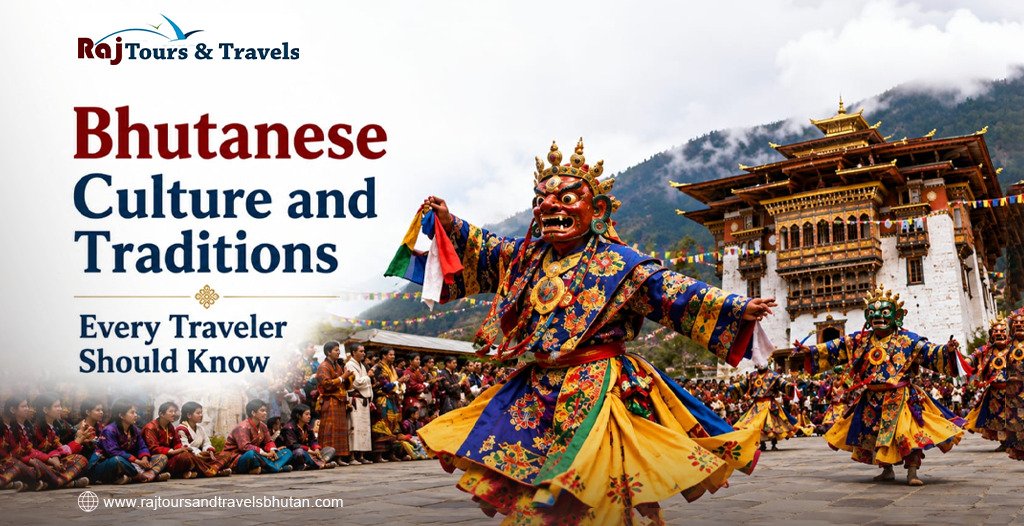
The Tsechus are colorful religious festivals that take place at various locations all through the year within Bhutan at monasteries or dzongs. The festival is marked by the performance of masked dances by monks depicting the legends of Buddhism and Bhutanese folklore.
A tour during the Tsechu festival will be an amazing experience for tourists, where they can see the culture of Bhutan in its most colorful, musical, and symbolic form.
7. Architecture That Reflects Cultural Identity
The architecture of Bhutan is easily identifiable through its sloping roofs, elaborate paint designs on wood, and the dzongs which act as both religious and administrative centers. The architectural features have been maintained to such an extent that all contemporary buildings in the country are designed according to architectural traditions.
The preservation of such architectural features is one of the elements that makes Bhutan unique compared to other destinations in the Himalayas.
8. A Deep Respect for Nature
The conservation of the environment has a very close relationship with the cultural values of the Bhutanese people, owing to the influence of Buddhism on the Bhutanese society. The country of Bhutan happens to be one of the few carbon negative nations in the world, and its regard for the environment can be seen through strict laws of conservation.
Tourists are likely to experience this regard for the environment throughout their journey.
Tips for Traveling Respectfully in Bhutan
- Booking from a tour agency with experience in Bhutan will help you to know the cultural etiquette applicable in different regions.
- Rental car services in Bhutan and taxi services in Bhutan are advisable because they are driven by locals and you will learn from them.
- Allocate enough time to have interactions with the locals rather than moving fast in the cultural sites.
- Visit the Tsechu festival if your dates coincide with it.
- Shop responsibly to support the local craftsmen.
Why Choose Raj Tours and Travels
Being a very seasoned tour operator in Bhutan, Raj Tours & Travels provides you with the opportunity to not only admire the beauty of Bhutanese landscapes but to also understand the culture of the place. With the help of your professional guides as well as transportation, including the renowned car and taxi service in Bhutan, you are sure to have an experience of a lifetime!